
Iza Karaszewska – artystka wizualna, absolwentka Sztuki Mediów i Edukacji Wizualnej na Wydziale Sztuk Pięknych w Toruniu oraz doktorantka w Szkole Doktorskiej Academia Artium Humaniorum. Brała udział w wystawach zbiorowych i indywidualnej w kraju i za granicą. W swojej twórczości łączy tradycyjną technikę szydełkowania z nowymi mediami, eksperymentując z możliwościami łączenia struktur tekstylnych, światła i obrazu. W wolnym czasie zajmuje się również tworzeniem grafik wektorowych.
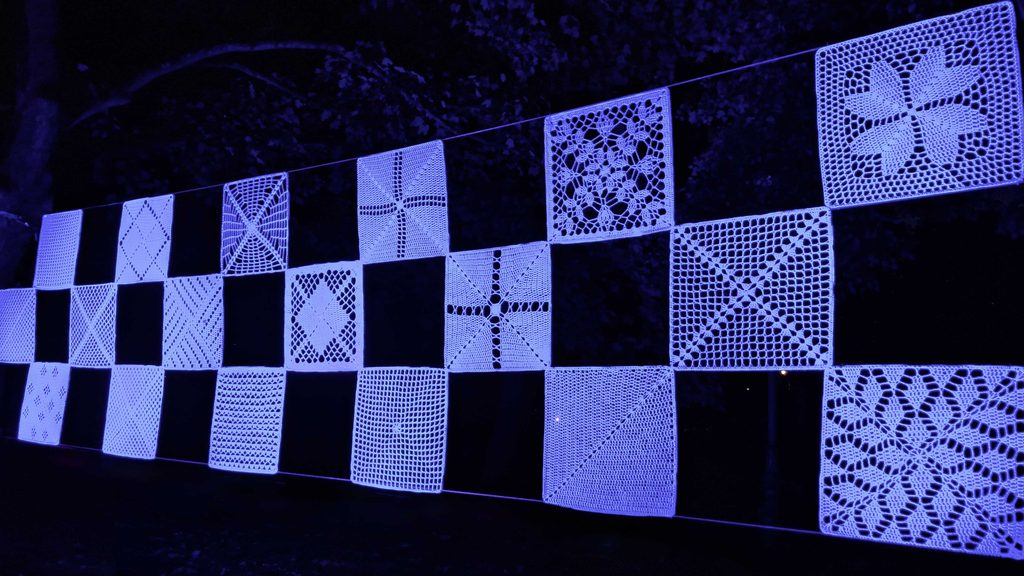
Instalacja The uniqueness of infinity to zwrócenie uwagi na konsumpcjonizm, oraz masową produkcję – nadprodukcję. Obecny trend na tworzenie różnorodnych przedmiotów, niejednokrotnie słabej jakości, oraz częsta ich wymiana generują odpady i powodują zanieczyszczenie Ziemi. Biały kolor włóczki użytej do projektu symbolizuje utratę życiowej barwy wymierających gatunków roślin i zwierząt, spowodowaną nadmierną eksploatacją środowiska. Motywy szydełkowe zaprezentowane w instalacji wykonane są ręcznie i nawiązują do dawnych czasów, kiedy ubrania robiono w domowym zaciszu. Jest to tym samym hołd dla pracy ręcznej wypartej przez produkcję masową.
/
Iza Karaszewska is a visual artist, a graduate of Media Art and Visual Education at the Faculty of Fine Arts in Toruń, and a PhD student at the Academia Artium Humaniorum Doctoral School. She has participated in collective and solo exhibitions both in Poland and abroad. In her practice, she combines the traditional technique of crocheting with new media, experimenting with the possibilities of merging textile structures, light, and image. In her free time, she also creates vector graphics.
The installation The uniqueness of infinity draws attention to consumerism and mass production—overproduction. The current trend of manufacturing various, often low-quality items, along with their frequent replacement, generates waste and leads to the pollution of the Earth. The white color of the yarn used in the project symbolizes the loss of vibrant life in endangered plant and animal species caused by the overexploitation of the environment. The crochet motifs presented in the installation are handmade, referencing bygone times when clothing was crafted in the comfort of one’s home. It stands as a tribute to handcraft, which has been displaced by mass production.